In a serious relationship with this scene :}
Monday, December 23, 2013

Monday, December 16, 2013
airtightinteractive.com, what a great idea!
airtightinteractive.com displays search results visually as in the shot below:
 If you are a teacher, you'll immediately appreciate the relevance of this tool for brainstorming ideas, which is by far the most difficult stage in any writing lesson. Teaching students how to generate ideas is a perennial source of agony for teachers: how to make sure students' knowledge and experience match the requirements of a given piece of writing? Age and cultural background do not lend much help here; similarly, exposure to mass media seems to leave students blank and untouched. All of this usually boils down to a casual "we don't have ideas." What happens next is episode after episode of betraying the course objectives, where the teacher sinks into a teach-answer-teach loop: instruction-no reaction/call for help-modelling of answer-instruction etc. It's a tale of helplessness disguised as a-matter-of-fact teaching routine which seems to satisfy students, poor vessels to be filled to the brim with facts, to quote Dickens in Hard Times.
Let's keep literature at bay or we will be dragged into the existential Why I am teaching writing at all?


Let's keep literature at bay or we will be dragged into the existential Why I am teaching writing at all?
airtightinteractive.com presents an interesting tool that might alleviate this existential angst.This is called a related_tag_browser, a sophisticated geeky term that means an application that collects search data and presents it visually. Interestingly enough, the results appear as if organised in a typical graphic organizer which teachers commonly use to brainstorm ideas. What's more, in the centre of the diagram you can find pictures of the key words pasted at the perimeter. There is only one problem, which I guess you have already found: where can the student step in?
Friday, November 29, 2013
Online Testing -Questionnaire 1
This is the first phase of data mining for a paper I am writing on technology-assisted assessment. The following questionnaire if meant to be taken by beginner-elementary students:
Thursday, November 28, 2013
Eternal sunshine of the spotless mind!


“How happy is the blameless vestal’s lot!
The world forgetting, by the world forgot.
Eternal sunshine of the spotless mind!
Each pray’r accepted, and each wish resign’d”
― Alexander Pope, Eloisa to Abelard
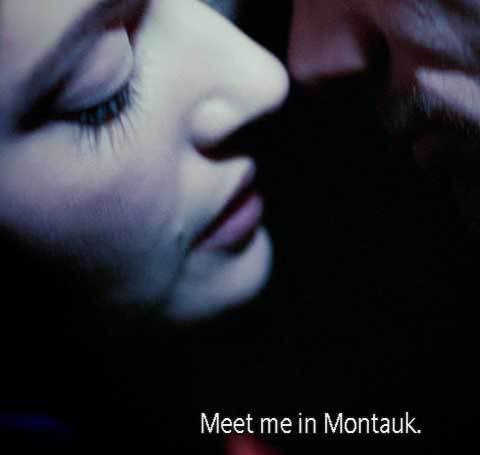
The piece of pleasure under focus here is this 2004 film which I immediately felt was a jewel, a chocolat fondant cake which should not be eaten casually in response to a mundane instinct of hunger. The consumer age we live in has sadly conditioned our interaction with any product we can buy. The array of emotions which advertising utilizes to emphasize the pleasure of consuming a product are necessarily fake if not gross, and this lack of authenticity transpires to the arts, but again, there are always exceptions.
So to go back to postponement of pleasure, I had no clue as to when I should watch this film. I had assurance from the conviction that Jim Carrey is an incredibly multi-faceted artist. His persona can be as superficially clownish in Ace Ventura as tragically pitiful in The Truman Show:

The script of Eternal Sunshine of the Spotless Mind is not less emotionally intelligent than the performances of Jim Carrey. In the teaching profession, the term 'rapport' holds a central position in classroom interaction and in the resultant learning. Call me an anti-rationalist but I still believe only few are born teachers; likewise, few actors can build rapport with an audience as early as the first frames of a film.
If you are keen on the study of genre in literature or any of the liberal arts, you might have a solid conviction that mixing up genres is a risky business. This film nonetheless mixes science fiction, romance and comedy without running the risk of ruining the taste of the story. Eternal Sunshine thus finds a special niche of its own and succeeds in building an illusion of life in its comprehensiveness, contradictions and overwhelmingness.
The film is about forgetting and how necessary and controllable it is. Modern psychology says that forgetting is natural and that as we grow older, our memory become selective. The main thrust of Eternal Sunshine is how controllable that selection is. Can we trust the vital task of erasing painful memories to the highly unpredictable sub-conscious? Are memories definitely erased or only momentarily subdued? And then, to borrow teaching jargon, can learning to understand life happen if mistakes go unaware of or coerced so as not to happen at all?

I think that even Alexander Pope believed in the impossibility of a "spotless mind". This is merely a hyperbole pinched between desire and frustration. We have to walk the minefield of depression and evade self-flagellation as much as possible. A lot of people enjoy lamenting over spilled milk and that's because mourning one's past kills the need for action and provides further excuses for procrastination. I think we had enough of Hamlet:

It is time to catch a train to Montauk:)
Saturday, November 23, 2013

Do we need Online assessment?
This is a questions many lecturers ask at the college where I work. Note that I did not refere to students' take on the issue and that's because students usually have a more 'pragmatic,' end-user perspective on what's happening in the classroom. To put it simply, students care less about how to achieve results than about results themselves.

Conversely, the notion of success for lecturers is related to how they would manage learning in accordance with syllabus and methodology.
Called a 21st century teacher skill, the use of ICT, instructional technology, e-learning -you name it- has been forcibly inscribed on the agenda of many lecturers. Let's face it here, the main problem with using technology in the classroom is that:
Technology is evolving at a much faster pace than teachers' ability to assimilate it
Assessment is one area where technology is trying to revolutionize teaching. The trend started with web-based questionnaires for data collection then was seen in many other areas where performance of users has to be measured: driving license theoretical tests, psychology tests and screening phases for recruitment purposes etc.
Online testing is not the new kid on the block of ELT. When compared to traditional testing online testing has clearly the edge. The following presentation explains this advantage:

Online testing is not the new kid on the block of ELT. When compared to traditional testing online testing has clearly the edge. The following presentation explains this advantage:
Online Testing: An Authentic Twist to Traditional Assessment - Bloomsburg University Business Education Spring 2005 Workshop in Allentown, PA from mwiscount
As I have been involved for some time in the administration of online tests, I can safely admit that the whole business of online testing is still at the business level, that is, it is viewed more as a product to be marketed than a useful teacher tool. Sadly, the slides posted above reproduce this mercantile attitude to online testing. Publishers simply want to sell products rather than solve problems.
What's more, covert marketing of this kind has been easily confounded with academic endeavour. I is not uncommon in this conjecture to book a specialized workshop or presentation in an international ELT conference and discover the sad truth that you were fooled into watching a fancy advertising campaign of a new book, website or a ridiculously expensive tab.

Please don't get me wrong here. I believe that marketers are absolutely justified in their hunt for potential customers, yet I feel that selling products to the uninformed teacher population is like selling UV glasses to the blind or shoes to the crippled. As I have been involved for some time in the administration of online tests, I can safely admit that the whole business of online testing is still at the business level, that is, it is viewed more as a product to be marketed than a useful teacher tool. Sadly, the slides posted above reproduce this mercantile attitude to online testing. Publishers simply want to sell products rather than solve problems.
What's more, covert marketing of this kind has been easily confounded with academic endeavour. I is not uncommon in this conjecture to book a specialized workshop or presentation in an international ELT conference and discover the sad truth that you were fooled into watching a fancy advertising campaign of a new book, website or a ridiculously expensive tab.

I might come back to the issue of technophobia and the perils of digital migration in a future post, but suffice to say now that the teaching profession needs tools to make learning happen rather than products teachers are left with no options but to consume.
A Workshop on IWB
These are some of the slides I used for a workshop I gave at Muscat College on 10/03/2013. We have two IWBs at the college, but based on feedback from students and lecturers, the rate of actual classroom use of these is sporadic, to say the least. Besides being embarassing for lecturers, this laxity is also counterproductive for management which invested a considerable lump in these fancy-but-seemingly-useless gadgets.
What I Think
My own opinion, should you ask for one, is that IWBs can certainly add a lot of spice to any lesson. They serve to highlight lesson elements, draw students' attention as well as motivate the kinetic ones among them to participate in the lesson unfolding. The technology used is topnotch and constantly evolving; most importantly, I think that the appeal of IWB is not only driven by strong marketing strategies, but that there is some true form of research and understanding of the reuirements of research and teaching methodology that has been taken into consideration by the developers.
Problems, Problems:
The following video summarizes it all:
To put it simply and briefly, people should be trained to do something before they are called "dumb". The main problem and probable unpopularity of technology tools intended for the teacging profession is that users often feel not ready to start using them. And then let's face it, for some people, using a simple video projector or even an old-fashioned OHP (overhead projector)

can be mind boggling. Standard use of technology, not to mention creative use of it, is a skill that can be cultivated and reinforced. All worries, fears and insecurities about IWBs by senior teachers (as well as younger ones) can be cleared through the implementation of professional teacher support by a fellow teacher with enough technical knowledge (and patience) so that both teachers and students gain something out of this really promising tool.

p.s: I don't particularily support the use of "dumb" in the video above, but something of that kind happened in the place I have been working in, where an unsupported teacher used whiteboard markers on the SmartBoard. Panic ensued, and the teacher felt too embarrassed to ask for help cleaning the IWB.
Tip: you can use water and soap to clean the IWB.
Saturday, January 19, 2013
DJANGO UNCHAINED: A Revenge Fantasy by Tarantino

I was so pleased to watch Django two days ago, probably at the same time the film was rolling in theaters in the US. I can't remember the first Tarantino film I watched in the last decade; was it Pulp Fiction? -that bizarre mixed-bag compilation of unwarranted gore and pedantic dialogues that might either recreate or parody old films from diverse genres. It is really so hard to describe the feeling movie-goers have after watching Kill Bill, Death Proof, Jackie Brown. I'd rather call Tarantino a master of manipulation when it comes to your personal viewer experience. It is true that he borrows a lot from other films; a practice that poses a real question as to the director's creativeness and sense of genuine ownership of his material, yet that it is precisely what Tarantino is great at. He is simply a master of the postmodernist technique of pastiche. And after all, this does not need genius to work flawlessly: if you like the seventies as a time period and as a cultural embryo for art-as-pleasure, then you'll like everything that Tarantino does. "Legendary" is simply the word for the seventies: Kung Fu, Disco, Soul, Punk, Sun Glasses, beast sports cars, Spaghetti westerns are icons which reappear often and again in Tarantino's films. Manipulation happens when those iconic references are inserted into the film at such times that seem fortuitous for others but deeply meaningful for you as a seventies lover. This behind-the-scenes dialogue between you and the director is cryptic and complicitous. This looks like Tarantino is a cook serving you the exotic dishes you like but in different locals, different stories. It is true that the historical narrative of slavery in america might be too sensitive to trifle with, hence the decision of Spike Lee not to watch the film is understood, but I personally don't see that the director misrepresented or twisted any history. His game is simply not representation; this is a silly artistic fantasy that draws satisfaction in the watcher from the sight of an impossibly-perfect revenge taking place. Shakespeare understood that in his tragedies, but we are lucky we have Tarantino to put it on screen.

I was so pleased to watch Django two days ago, probably at the same time the film was rolling in theaters in the US. I can't remember the first Tarantino film I watched in the last decade; was it Pulp Fiction? -that bizarre mixed-bag compilation of unwarranted gore and pedantic dialogues that might either recreate or parody old films from diverse genres. It is really so hard to describe the feeling movie-goers have after watching Kill Bill, Death Proof, Jackie Brown. I'd rather call Tarantino a master of manipulation when it comes to your personal viewer experience. It is true that he borrows a lot from other films; a practice that poses a real question as to the director's creativeness and sense of genuine ownership of his material, yet that it is precisely what Tarantino is great at. He is simply a master of the postmodernist technique of pastiche. And after all, this does not need genius to work flawlessly: if you like the seventies as a time period and as a cultural embryo for art-as-pleasure, then you'll like everything that Tarantino does. "Legendary" is simply the word for the seventies: Kung Fu, Disco, Soul, Punk, Sun Glasses, beast sports cars, Spaghetti westerns are icons which reappear often and again in Tarantino's films. Manipulation happens when those iconic references are inserted into the film at such times that seem fortuitous for others but deeply meaningful for you as a seventies lover. This behind-the-scenes dialogue between you and the director is cryptic and complicitous. This looks like Tarantino is a cook serving you the exotic dishes you like but in different locals, different stories. It is true that the historical narrative of slavery in america might be too sensitive to trifle with, hence the decision of Spike Lee not to watch the film is understood, but I personally don't see that the director misrepresented or twisted any history. His game is simply not representation; this is a silly artistic fantasy that draws satisfaction in the watcher from the sight of an impossibly-perfect revenge taking place. Shakespeare understood that in his tragedies, but we are lucky we have Tarantino to put it on screen.
Subscribe to:
Comments (Atom)